
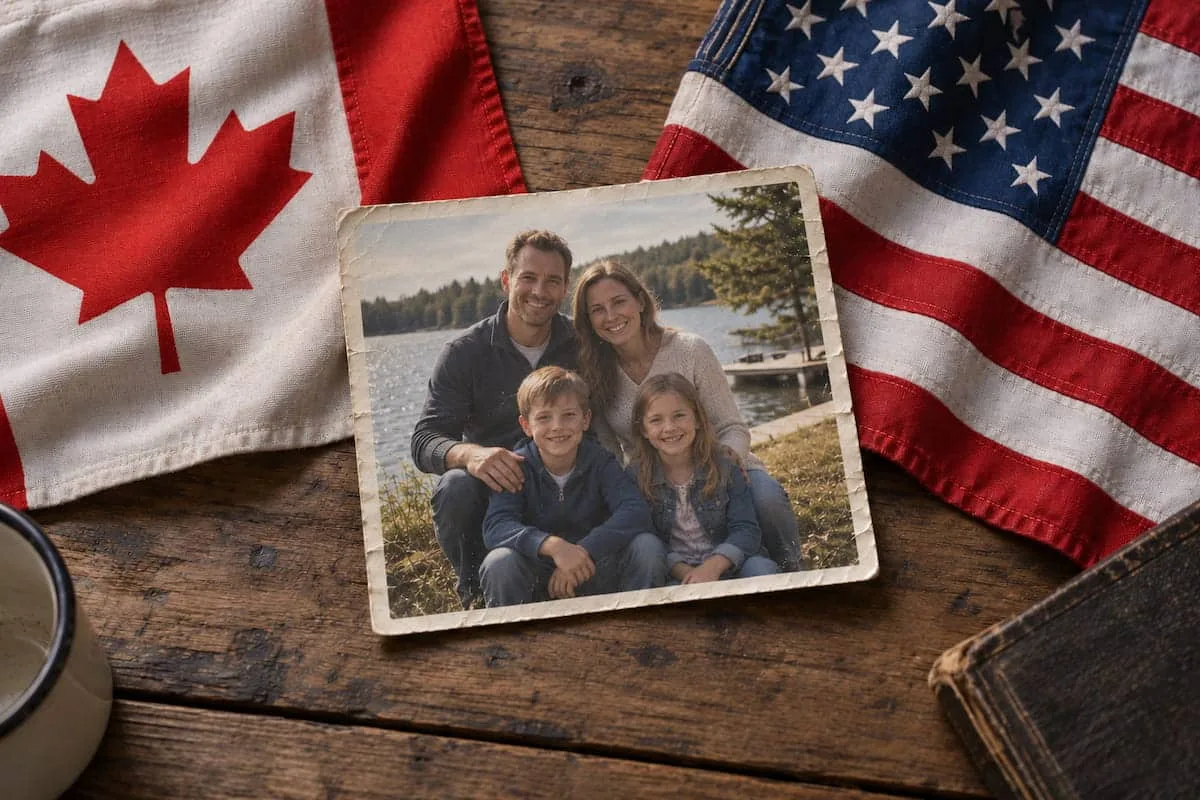
How Bill C-3 Unlocks Canadian Passports for Americans with Historic Ancestry
A simple ancestral tie could instantly grant you dual nationality
Americans seeking an exit option or a dual passport can now claim Canadian citizenship through ancestry, provided they have an unbroken family line to a Canadian relative. Thanks to a landmark legislative shift, millions of people who thought they were too many generations removed automatically qualify as citizens from birth. But while the law makes claiming status simpler than ever, a massive influx of applicants has pushed wait times for proof-of-citizenship certificates to nearly three years, more than six times longer than last year.
The surge in interest follows sustained public discontent in the United States. An Associated Press-NORC Center for Public Affairs Research survey of 1,165 American adults found that 72% believe the country is heading in the wrong direction, with 48% holding hardly any confidence in the executive branch and 53% lacking confidence in Congress. Every AP-NORC poll since August 2021 has kept that wrong-direction figure above 60%. Gallup’s 2025 World Poll similarly revealed that 20% of Americans, and 40% of women aged 15 to 44, would like to move abroad permanently. For those with Canadian roots, claiming status requires no language exam, citizenship test, oath, or time spent living in Canada.
How Bill C-3 rewrote Canada’s citizenship rules
📌 Read More
| Rule Category | Old System (Pre-Dec 15, 2025) | New Rules (Bill C-3) |
|---|---|---|
| Generational Limit | Citizenship cut off after the first generation born abroad. | First-generation limit removed for anyone born before Dec 15, 2025 with an unbroken line. |
| Children Born Abroad After Cutoff | Could not inherit citizenship if parent was born abroad. | Parent born abroad must show 1,095 days of physical presence in Canada before the birth. |
| Processing Wait Time | Under six months for proof of status. | Nearly three years for citizenship certificates. |
What qualifying for Canadian status means for your family and finances
Parents born outside Canada who want to pass citizenship down to children born after December 15, 2025 face a specific physical presence standard. Under Bill C-3, a Canadian parent who was also born abroad must show at least 1,095 days of physical presence in Canada before their child’s birth. For children born before that cutoff date, status passes down automatically through the same unbroken line without any time-in-country requirement.
























University applicants stand to save over six figures on tuition by securing proof of status before enrolling. A Canadian student from outside Quebec enrolling in a Bachelor of Arts program at McGill University in Montreal pays 432.85 CAD per credit, or roughly 13,000 CAD per year, compared to nearly 49,000 CAD annually for an international student. Over a four-year degree, that tuition gap tops 140,000 CAD. To help students lock in these savings, Canada fast-tracks proof of citizenship applications for individuals who plan to pursue higher education in the country.
Young adults holding Canadian passports gain expanded global mobility across dozens of foreign nations. Canadian citizens can obtain working-holiday permits in more than 30 countries and territories, including bilateral arrangements like Portugal’s agreement for Canadians aged 18 to 35. Holding dual Canadian citizenship creates no Canadian tax filing requirement while living in the United States, as Canada taxes individuals based on physical residence rather than nationality.

Americans tracing historic family roots may discover eligible lines tied to massive historic migration patterns. Between 1840 and 1930, nearly 900,000 French-speaking Canadians migrated from Quebec to New England mill towns, leaving roughly one in four New Englanders, including 300,000 Connecticut residents, potentially eligible. Surnames like Tremblay carry 114 times the average probability of Canadian origin, while Ouellet carries 368 times the likelihood, alongside family names like Roy, Desjardins, White, King, and Greenwood.




👀 You Missed
You Might Also Like






No responses yet