MENA Regenerative Agriculture Venture Programme 2026/2027
Brief Description
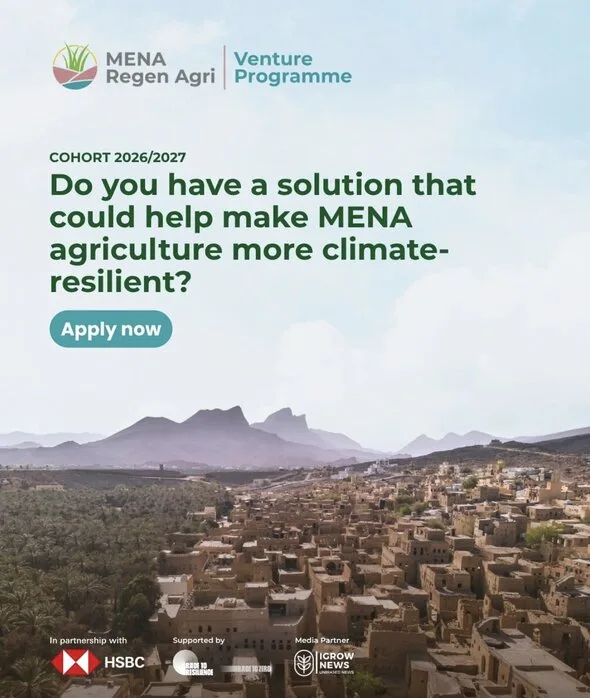
The MENA Regenerative Agriculture Venture Programme 2026/2027 is a transformative initiative designed to empower and up-skill scientists, researchers, and students who are tackling fundamental agricultural hurdles across the Middle East and North Africa. If you are working on innovative research, science, or nature-based solutions addressing food security, soil health, and climate resilience, this program offers a direct pathway to scale your vision. By joining, you gain access to world-class mentorship, specialized training, free online courses, and a chance for the top three finalists to secure $20,000 grants.
Name of Host Institution
MENA Regenerative Agriculture Venture Programme
Requirements/Eligibility Criteria
Solutions must operate within the field of regenerative agriculture, advancing climate-resilient and sustainable farming practices.
Open to researchers and innovators aiming to develop their work to the proof-of-concept stage and build essential entrepreneurial capabilities.
Innovations must be grounded in research, science, or nature-based solutions, with both process and technological innovations accepted.
Proposals must directly address food system challenges within the MENA region, such as climate adaptation, soil health restoration, carbon sequestration, biodiversity, and water security.
Open to applicants worldwide, excluding individuals based in Afghanistan, Iraq, Iran, Israel, Sudan, Libya, Yemen, and Syria.
Programme Benefits and Support
Participating in this journey equips you with extensive developmental resources. You will receive free access to self-paced online courses, specialist training, expert workshops, and an online digital community platform. Beyond mentorship and regional networking exposure, the top 3 finalists will each win one of three $20,000 grants to help accelerate their ventures into viable business solutions.
Researchers, innovators, scientists, and students worldwide are eligible, provided their solutions target agricultural and food system challenges in the MENA region and they do not reside in excluded countries.





































No responses yet