
Updated on
The biggest airport in Africa by passenger numbers is Cairo International Airport, which handled about 31 million passengers in 2025. O.R. Tambo in Johannesburg is second with roughly 19.7 million, followed by Addis Ababa Bole with about 13.1 million. Below is the full top 10 for 2025, the next 10 airports on the list, and what “biggest” actually means when people compare airports.
This list ranks airports by total passengers in a calendar year, counting arrivals, departures and transit passengers. Figures are rounded to one decimal place.
























📌 Read More
Africa’s 10 biggest airports by passengers in 2025
| Rank | Airport | Country | Passengers in 2025 |
|---|---|---|---|
| 1 | Cairo International (CAI) | Egypt | about 31.0 million |
| 2 | O.R. Tambo International, Johannesburg (JNB) | South Africa | 19.7 million |
| 3 | Addis Ababa Bole International (ADD) | Ethiopia | 13.1 million |
| 4 | Mohammed V International, Casablanca (CMN) | Morocco | 11.5 million |
| 5 | Hurghada International (HRG) | Egypt | 11.4 million |
| 6 | Cape Town International (CPT) | South Africa | 11.1 million |
| 7 | Marrakesh Menara (RAK) | Morocco | 10.2 million |
| 8 | Houari Boumediene, Algiers (ALG) | Algeria | 10.1 million |
| 9 | Sharm el-Sheikh International (SSH) | Egypt | 9.0 million |
| 10 | Jomo Kenyatta International, Nairobi (NBO) | Kenya | 9.0 million |
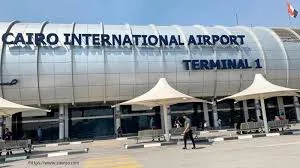
1. Cairo International Airport (Egypt)
Cairo is Africa’s busiest airport, with about 31 million passengers in 2025, up around 7% on 2024. It has three terminals and is the main hub of EgyptAir. A single peak day in 2025 saw about 103,000 passengers pass through on 696 flights. Johannesburg was the continent’s busiest airport for most years between 2008 and 2019, but Cairo has led since 2020 and the gap has grown to more than 11 million passengers.
2. O.R. Tambo International Airport, Johannesburg (South Africa)
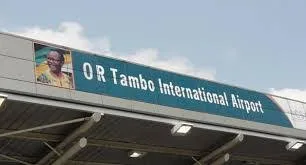
O.R. Tambo handled about 19.7 million passengers in 2025, up around 7%. It is the main gateway to Southern Africa and the main hub of South African Airways. The airport sits at high altitude, about 1,700 metres above sea level.
3. Addis Ababa Bole International Airport (Ethiopia)
Bole handled about 13.1 million passengers in 2025. It is the home hub of Ethiopian Airlines, Africa’s largest airline, and is the continent’s main connecting point between Africa and Europe, Asia, the Middle East and the Americas. A much larger replacement airport is now under construction near Bishoftu (see below), and Bole is expected to become mainly a domestic airport once it opens.

4. Mohammed V International Airport, Casablanca (Morocco)
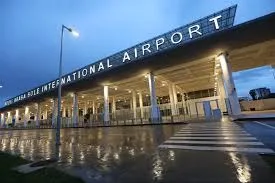
Casablanca handled about 11.5 million passengers in 2025, up roughly 9%. It is the main hub of Royal Air Maroc and Morocco’s biggest connecting point to Europe, West Africa and the Middle East.

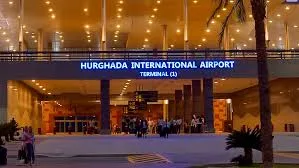
5. Hurghada International Airport (Egypt)
Hurghada is a Red Sea resort airport, so its traffic is mostly holiday travellers from Europe. It handled about 11.4 million passengers in 2025, a rise of about 18% on 2024, one of the fastest growth rates in the top 10.
📰 Similar Posts
6. Cape Town International Airport (South Africa)
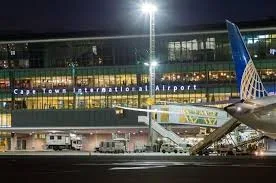
Cape Town handled about 11.1 million passengers in 2025, a record for the airport and up roughly 7%. It is the main entry point for visitors to the Western Cape and the second busiest airport in South Africa after O.R. Tambo.
7. Marrakesh Menara Airport (Morocco)
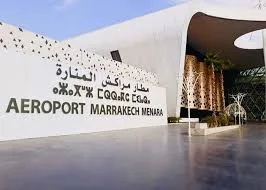
Marrakesh handled about 10.2 million passengers in 2025, up around 10%. Most of its traffic is international tourism, with strong routes to Europe. The terminal is known for combining modern design with traditional Moroccan patterns.
8. Houari Boumediene Airport, Algiers (Algeria)
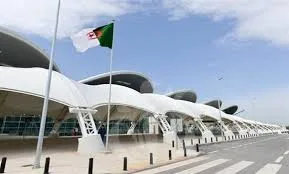
Algiers handled about 10.1 million passengers in 2025, up around 11%. It is the main hub of Air Algerie and Algeria’s busiest link to Europe and the rest of North Africa.
9. Sharm el-Sheikh International Airport (Egypt)
Sharm el-Sheikh, on the Red Sea coast of the Sinai Peninsula, handled about 9.0 million passengers in 2025. That is a jump of about 32% on 2024, the fastest growth in the top 10, and it moved the airport ahead of Nairobi and Lagos.
10. Jomo Kenyatta International Airport, Nairobi (Kenya)
Nairobi handled about 9.0 million passengers in 2025, up around 3%. It is East Africa’s leading hub and the home base of Kenya Airways, with strong links to safari destinations, the Kenyan coast and onward flights to Europe and the Middle East.

Which airports rank 11 to 20 in Africa?
| Rank | Airport | Country | Passengers in 2025 |
|---|---|---|---|
| 11 | Murtala Muhammed International, Lagos (LOS) | Nigeria | 7.5 million |
| 12 | Tunis-Carthage (TUN) | Tunisia | 7.4 million |
| 13 | Nnamdi Azikiwe International, Abuja (ABV) | Nigeria | 5.8 million |
| 14 | King Shaka International, Durban (DUR) | South Africa | 5.5 million |
| 15 | Accra International (ACC) | Ghana | 3.6 million |
| 16 | Agadir-Al Massira (AGA) | Morocco | 3.5 million |
| 17 | Julius Nyerere International, Dar es Salaam (DAR) | Tanzania | 3.0 million |
| 18 | Blaise Diagne International, Dakar (DSS) | Senegal | 2.9 million |
| 19 | Marsa Alam International (RMF) | Egypt | 2.8 million |
| 20 | Tangier Ibn Battouta (TNG) | Morocco | 2.8 million |
Lagos is the busiest airport in West Africa, with about 7.5 million passengers in 2025, up around 13%. Abuja is second in Nigeria and Accra is the third busiest in the region on this list.

What is the difference between the biggest and the busiest airport?
“Biggest” can mean three different things: the most passengers, the most flights, or the largest physical site and capacity. This page ranks by passengers because it is the figure airports publish every year and the easiest one to compare. By that measure Cairo is first. An airport can also be large in area or capacity without being the busiest, so always check which measure a ranking is using.
The list is about to change at the top end of capacity. Ethiopia started building a new airport near Bishoftu in January 2026, at an estimated cost of US$12.5 billion. It is planned to handle 60 million passengers a year in its first phase, expected by 2030, and 110 million passengers a year when fully built. If completed as planned, it would be far larger than any airport in Africa today. Ethiopian Airlines is managing its development and will operate it.
Quick answers
What is the biggest airport in Africa?
By passengers, it is Cairo International Airport with about 31 million in 2025. By planned capacity, the new Bishoftu airport in Ethiopia will be the largest once built.
Which is the busiest airport in sub-Saharan Africa?
O.R. Tambo International Airport in Johannesburg, with about 19.7 million passengers in 2025, followed by Addis Ababa Bole with about 13.1 million.
Which is the biggest airport in Nigeria?
Murtala Muhammed International Airport in Lagos, with about 7.5 million passengers in 2025. Abuja’s Nnamdi Azikiwe International is second with about 5.8 million.
Do I need a transit visa when connecting through these airports?
It depends on your passport, the country of the connecting airport and whether you leave the airside area. Check the transit rules of the country you are connecting through before you book, especially if you have a separate ticket for each leg or need to collect your bags. If you are connecting through Lagos or Abuja, our guide to Nigerian visa types explains Nigeria’s own transit visa.
Planning a trip through one of these airports?
If you need help with routes, transit rules or visa guidance for any of these hubs, contact us and we will point you to the right requirements for your passport.




👀 You Missed
You Might Also Like










No responses yet